
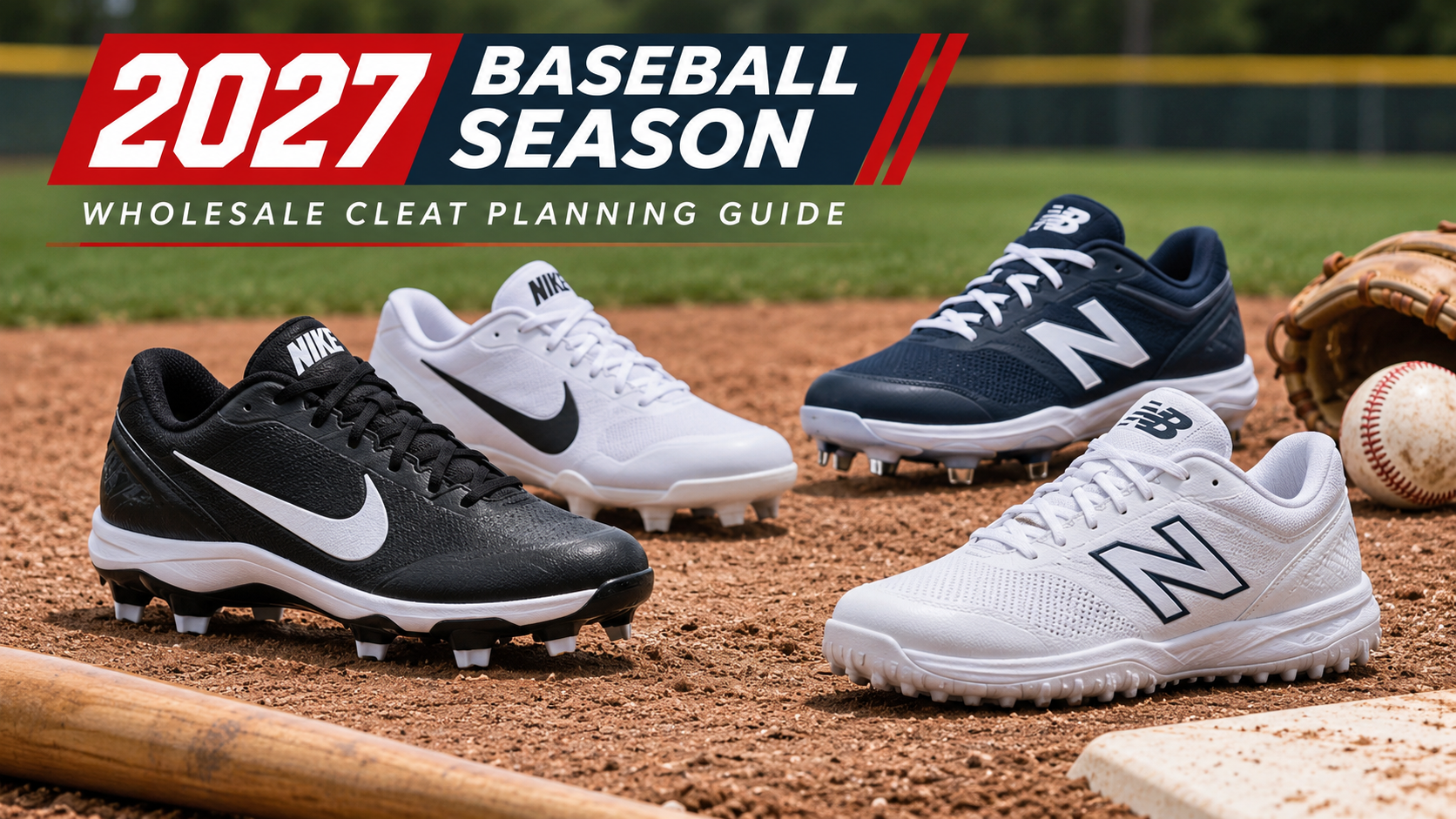
The 2027 baseball season may still be months away, but for sporting goods retailers, preparation should start well before the first pitch.
Every spring, players, parents, coaches, and team managers begin searching for baseball footwear. For retailers, having the right cleats available when customers need them can make the difference between a successful season and missed sales.
Whether you own an independent sports store, manage a Play It Again Sports location, or supply footwear to local baseball teams, buying wholesale baseball cleats ahead of the season helps you plan inventory, control costs, and prepare for customer demand.
Here's how to approach your baseball cleat inventory for 2027.
1. Start Planning Your Baseball Cleat Inventory Early
One of the biggest mistakes retailers can make is waiting until baseball season begins to think about inventory.
By that time, customers may already be searching for specific sizes, styles, and brands.
A practical inventory planning schedule looks like this:
November–December: Review last season's sales, identify missing sizes, and research wholesale suppliers.
January–February: Place bulk orders, organize incoming inventory, and prepare online product listings.
March–April: Monitor sales, respond to local league demand, and restock popular sizes where available.
Exact timing depends on your local baseball calendar.
Ordering early doesn't necessarily mean buying more. It means giving your business enough time to select inventory carefully and avoid last-minute purchasing decisions.
2. Know Which Types of Baseball Cleats Your Customers Need
Not every baseball player needs the same type of footwear.
Understanding the differences between molded cleats, metal cleats, and turf shoes can help retailers build a more practical product selection.
Molded Baseball Cleats
Molded baseball cleats feature rubber or plastic studs designed to provide traction on appropriate playing surfaces.
They're a versatile option for many recreational and youth players, making them an important category for sporting goods retailers.
For stores serving younger athletes, molded cleats are often a sensible starting point.
Metal Baseball Cleats
Metal baseball cleats feature metal spikes that provide traction on suitable dirt and grass fields.
They're commonly used by older and competitive players, although regulations vary between leagues, age groups, and facilities.
Retailers should always check local league requirements before deciding how much metal-cleat inventory to carry.
Baseball Turf Shoes
Turf shoes use smaller rubber traction patterns and are designed for appropriate artificial turf and training surfaces.
They're particularly useful for customers who practice indoors or want footwear for baseball training.
Carrying turf shoes alongside traditional baseball cleats can help retailers serve a wider range of customers.
3. Choose Wholesale Brands Customers Recognize
When customers shop for baseball footwear, familiar brands can make purchasing decisions easier.
Nike and New Balance are two recognizable names in baseball footwear, with styles designed for different playing needs.
At Cleat Warehouse, retailers can explore wholesale baseball footwear options that include:
Nike molded baseball cleats: A practical option for stores looking to offer recognizable performance footwear.
New Balance molded baseball cleats: Another established brand for retailers serving adult baseball players.
New Balance FuelCell Ohtani 1 turf shoes: A specialized option for retailers catering to baseball training and turf-footwear customers.
Before ordering, compare each assortment's size range, pair quantity, price, and packaging options.
View the wholesale baseball cleats collection to explore current product listings.
4. Select the Right Size Distribution
Choosing the right sizes is just as important as choosing the right brands.
A store located near youth baseball leagues may require a different inventory mix from one serving high school, college, or adult recreational players.
Before placing an order, review:
Your best-selling sizes from previous seasons.
Customer requests for unavailable sizes.
The age groups served by nearby baseball programs.
Local demand for adult versus youth footwear.
The size breakdown included in each wholesale prepack.
Wholesale prepacks can simplify inventory purchasing by combining multiple sizes into a single box.
For example, Cleat Warehouse lists adult Nike molded baseball cleats in a 28-pair prepack covering men's US sizes 7–13.
Another option is a 40-pair New Balance molded baseball cleat prepack with a broader adult size range.
These assortments allow retailers to purchase multiple sizes without ordering every pair individually.
However, it's still important to review the exact breakdown before buying.
5. Calculate Your Real Profit Margin Before Ordering
Wholesale pricing is important, but the lowest price per pair doesn't automatically mean the best purchasing decision.
Retailers should calculate their potential margins using the total cost of acquiring and selling the products.
Consider an example:
A retailer purchases baseball cleats at a wholesale price of $27 per pair.
If the retailer sells each pair for $55, the calculation would be:
Wholesale cost: $27
Selling price: $55
Gross profit before additional costs: $28
Gross margin before additional costs: approximately 50.9%
This is an illustrative example, not a guaranteed resale price or profit.
Freight, applicable surcharges, payment processing, returns, and other operating costs can reduce the final margin.
The more accurately you estimate these expenses, the easier it becomes to establish sustainable retail pricing.
6. Consider Buying Baseball Cleats in Bulk Prepacks
For many sporting goods businesses, ordering individual footwear styles can become time-consuming.
Wholesale prepacks provide a more streamlined alternative.
Instead of purchasing every size and style separately, retailers receive a predetermined assortment of footwear in one order.
Some potential benefits include:
Simpler purchasing: A single prepack can help fill several shelf positions without numerous individual orders.
Predictable unit costs: Knowing the number of pairs and total box price makes inventory budgeting easier.
Size variety: A well-matched assortment can accommodate multiple customer needs.
Easier inventory planning: Retailers can compare different prepacks based on size distribution, product category, and wholesale cost.
The important consideration is finding an assortment that matches actual customer demand.
A larger prepack isn't necessarily better if its sizes or styles don't fit your market.
7. Don't Overlook Shipping and Freight Costs
When purchasing wholesale baseball cleats, shipping costs can significantly affect the final cost per pair.
Before completing an order, retailers should review the supplier's freight policy, particularly for larger-volume purchases.
At Cleat Warehouse, standard wholesale freight terms generally make shipping costs the responsibility of the purchasing business unless a specific promotion states otherwise.
Shipping costs depend on factors such as order size, weight, and delivery destination.
Retailers should also account for any applicable fuel surcharges and confirm whether their purchase qualifies for promotional freight arrangements.
Understanding these expenses before ordering helps avoid surprises when calculating final product costs.
You can review the company's freight policy for more information.
8. Prepare Your Store Before Customers Arrive
Receiving new inventory is only part of preparing for baseball season.
Retailers should also make sure customers can easily find the footwear they need.
Organize products by playing surface, footwear type, size, or age group where practical.
For online stores, create clear product listings that identify:
Brand and model
Available sizes
Cleat type and intended playing surface
Product condition
Retail price
Relevant league or facility restrictions, where applicable
Good photographs and accurate descriptions can reduce confusion and help customers choose suitable footwear.
Retailers can also contact nearby baseball programs to understand what players are likely to need before registration and tryouts begin.
9. Work With a Wholesale Supplier That Understands Retailers
A dependable wholesale supplier should do more than offer competitive prices.
Retailers also need clear product information, consistent communication, and transparent ordering terms.
Cleat Warehouse specializes in wholesale athletic footwear for retailers, teams, and sporting goods businesses across the United States.
Its baseball category includes branded footwear prepacks, allowing buyers to compare product types, quantities, and size ranges.
For business owners preparing for the upcoming season, purchasing from a supplier focused on wholesale sports footwear can simplify the sourcing process.
Explore the latest products at Cleat Warehouse.
Frequently Asked Questions
When should retailers order wholesale baseball cleats for 2027?
Planning during November or December 2026 gives retailers time to review sales history and compare suppliers. Actual purchasing dates should reflect local league schedules, supplier lead times, and available inventory.
Are molded baseball cleats suitable for youth players?
Molded cleats are commonly used by youth baseball players. However, retailers and customers should check the rules of their specific league and the surfaces where the footwear will be used.
Is buying baseball cleats in bulk cheaper?
Bulk purchasing can offer a lower unit acquisition cost, but the final value depends on freight charges, product mix, sell-through, and other business expenses.
What should I check before purchasing a wholesale cleat prepack?
Review the brand, total number of pairs, exact size breakdown, cleat type, unit price, product condition, and shipping terms.
Final Thoughts: Get Ready for the 2027 Baseball Season
A successful baseball season starts with thoughtful inventory planning.
By selecting suitable footwear types, reviewing size distributions, comparing wholesale costs, and preparing ahead of local demand, sporting goods retailers can make more informed purchasing decisions.
Ready to prepare your baseball inventory for 2027?
Explore Cleat Warehouse's wholesale baseball cleat collection and find bulk footwear options that fit your store's needs.